MANAGEMENT INFORMATION SYSTEMS
Management Information Systems (MIS) examines how organizations use people, processes, data, and information technologies to support operations, management, planning, and decision-making. The course introduces students to information systems, databases, business processes, enterprise systems, decision-support technologies, information security, digital transformation, and the strategic role of ICT in modern organizations.
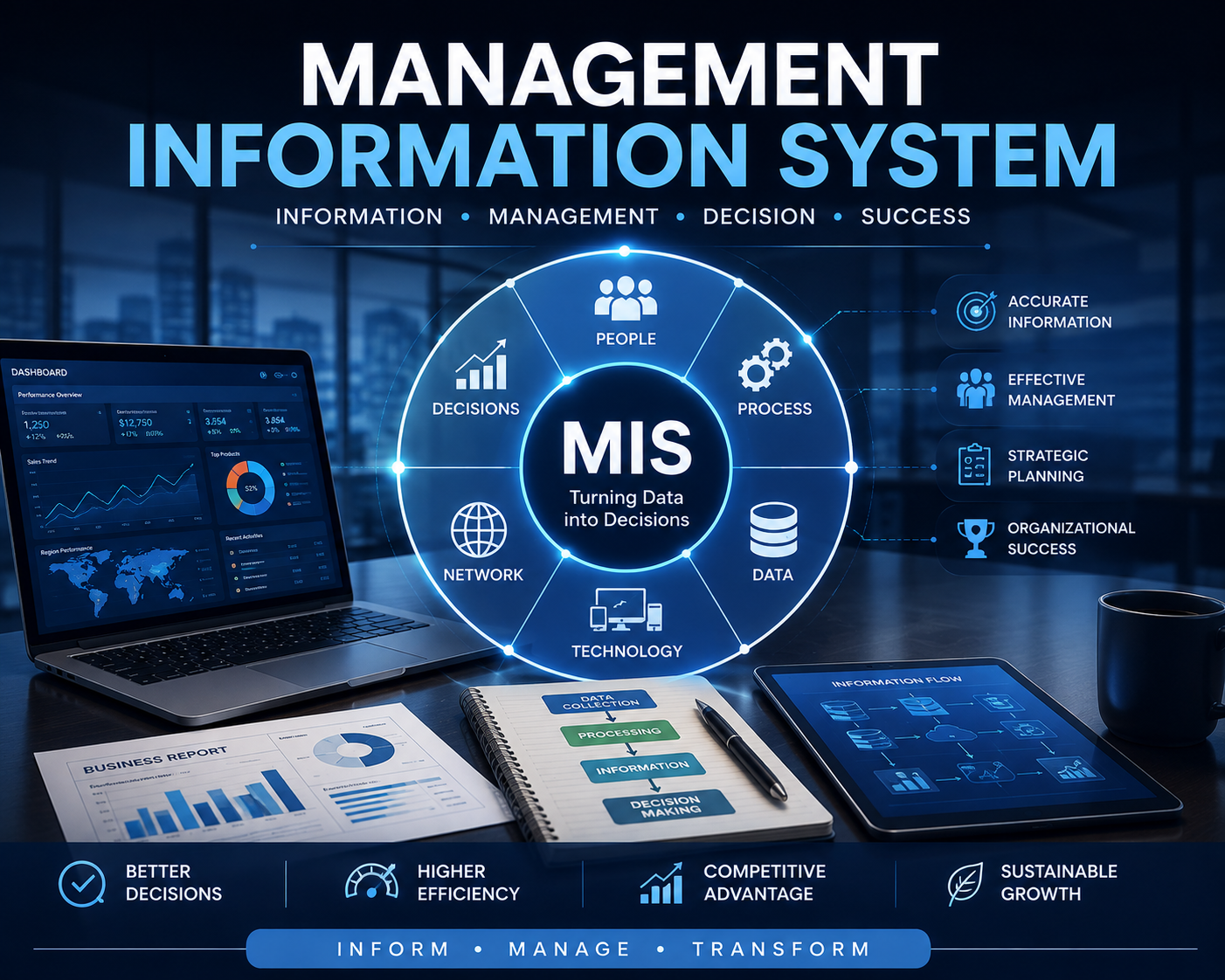
Management Information Systems (MIS) is a university-level course unit designed to provide students with a comprehensive understanding of how information, technology, people, and organizational processes are integrated to support effective management and organizational performance.
The course introduces students to the fundamental concepts of information systems and their role within modern organizations. Students examine how organizations collect raw data, process it into meaningful information, and use that information to support planning, coordination, control, problem-solving, and managerial decision-making.
The course explores the major components of an information system, including people, hardware, software, databases, networks, procedures, and organizational processes. Students learn how these components interact to create systems that support day-to-day business operations as well as tactical and strategic management.
Particular attention is given to different categories of organizational information systems, including Transaction Processing Systems (TPS), Management Information Systems (MIS), Decision Support Systems (DSS), Executive Support Systems (ESS), Enterprise Resource Planning (ERP) systems, Customer Relationship Management (CRM) systems, Supply Chain Management (SCM) systems, and Knowledge Management Systems (KMS).
Students also study business processes and information flows, examining how information moves between departments such as finance, human resources, marketing, procurement, production, sales, and senior management. The course demonstrates how integrated information systems can reduce duplication, improve coordination, increase efficiency, and provide managers with timely and accurate information.
The course further introduces students to database management, data analytics, business intelligence, dashboards, cloud computing, enterprise applications, e-commerce, mobile technologies, Artificial Intelligence, and emerging digital technologies that are increasingly influencing management and organizational decision-making.
An important component of the course is information systems planning and development. Students examine how organizations identify information requirements, select appropriate technologies, develop or acquire information systems, implement them, manage organizational change, and evaluate system performance.
The course also addresses the ethical, security, privacy, legal, and governance issues associated with organizational information systems. Students explore cybersecurity threats, access control, data protection, business continuity, disaster recovery, responsible use of organizational information, and the responsibilities of managers in protecting information resources.
Through practical examples and organizational case studies, students develop the ability to analyze business problems and determine how appropriate information systems can be used to improve operational efficiency, managerial effectiveness, customer service, strategic planning, innovation, and competitive advantage.
By the end of the course, students should be able to understand both the technical and managerial dimensions of information systems, evaluate the information needs of an organization, identify appropriate information-system solutions, and explain how technology can be strategically applied to support organizational objectives and sustainable growth.
Course Outline (Weekly)
| Week | Topics |
|---|---|
| Course outline will be available soon. | |