TRENDS IN COMPUTING
Trends in Computing introduces students to current and emerging developments shaping the computing industry. The course explores technologies such as Artificial Intelligence, cloud computing, Internet of Things (IoT), cybersecurity, blockchain, FinTech, big data, edge computing, quantum computing, green computing, and other emerging technologies, with emphasis on their applications, opportunities, challenges, and future impact.
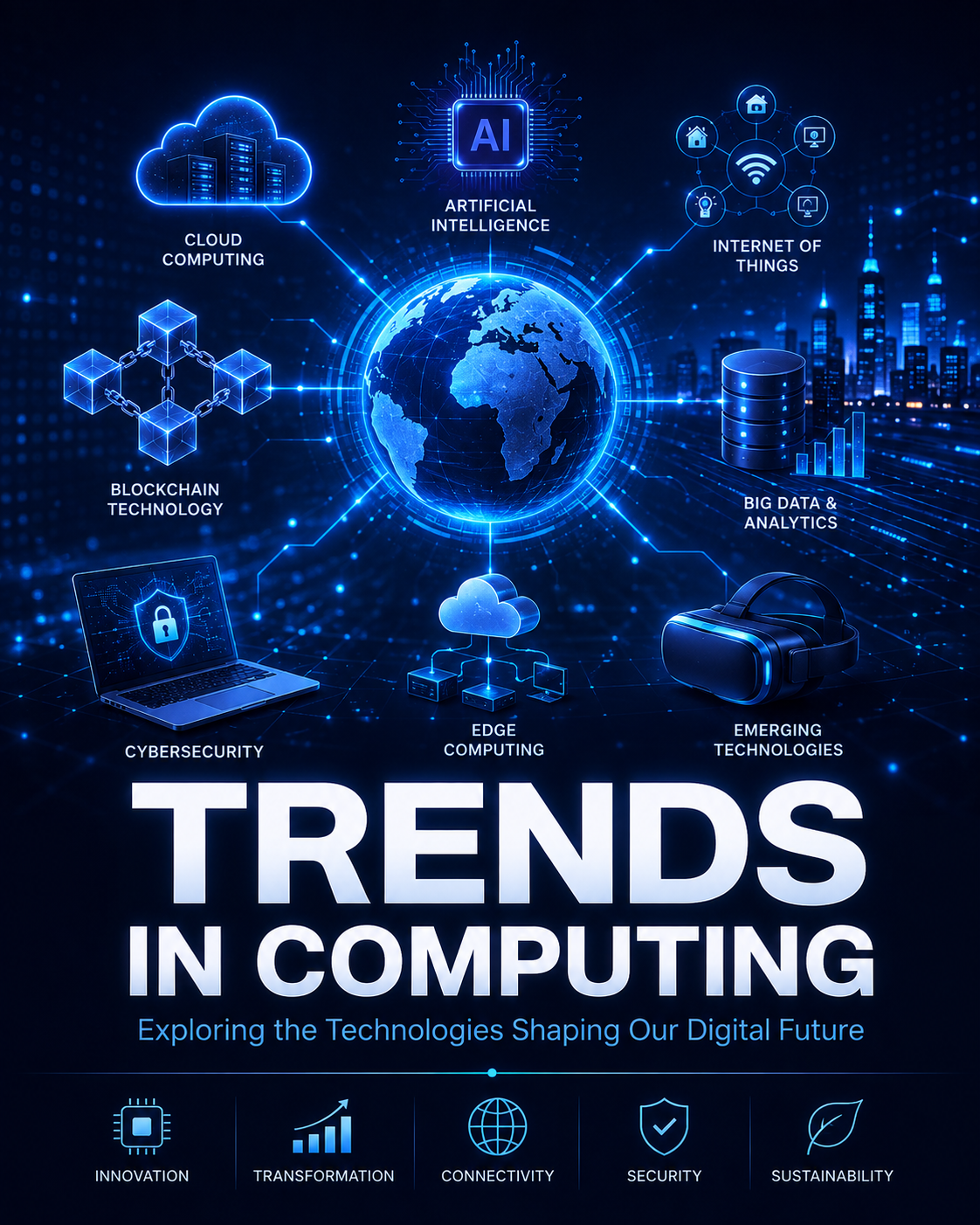
Trends in Computing is a comprehensive course unit designed to provide students with an understanding of the major technological developments that are transforming modern computing and society. The course examines the evolution of computing technologies and explores how emerging innovations are changing the way individuals, organizations, governments, and industries operate.
Students are introduced to key areas including Artificial Intelligence (AI), Machine Learning, Big Data and Data Analytics, Cloud Computing, Internet of Things (IoT), Cybersecurity, Blockchain Technology, Financial Technology (FinTech), Edge Computing, Quantum Computing, Extended Reality (AR/VR), robotics, automation, and green computing.
The course combines theoretical concepts with practical examples and real-world applications to help students understand how these technologies are being applied in sectors such as education, healthcare, agriculture, banking and financial services, business, government, transportation, communication, and manufacturing.
Special attention is given to the impact of emerging technologies within Uganda and the wider African context, including mobile money, digital transformation, financial inclusion, smart agriculture, digital government services, cybersecurity, and technology-driven entrepreneurship.
Students also examine the ethical, social, economic, security, privacy, environmental, and regulatory challenges associated with rapidly evolving computing technologies. Through discussions, case studies, illustrations, and practical activities, students develop the ability to critically evaluate new technologies rather than simply follow technological trends.
By the end of the course, students should be able to identify important computing trends, explain how emerging technologies work, evaluate their advantages and limitations, analyze their impact on organizations and society, and assess how future technologies can be responsibly applied to solve real-world problems.
Course Outline (Weekly)
| Week | Topics |
|---|---|
| Week 1 | Introduction to Trends in Computing |
| Week 2 | Artificial Intelligence and Machine Learning |
| Week 3 | Cloud Computing and Virtualization |
| Week 4 | Internet of Things, Mobile and Edge Computing |
| Week 5 | Big Data, Data Analytics and Modern Data Technologies |
| Week 6 | Blockchain, Cybersecurity and Digital Trust |
| Week 7 | Immersive Technologies, Robotics and Intelligent Systems |
| Week 8 | Future of Computing and Emerging Technologies |